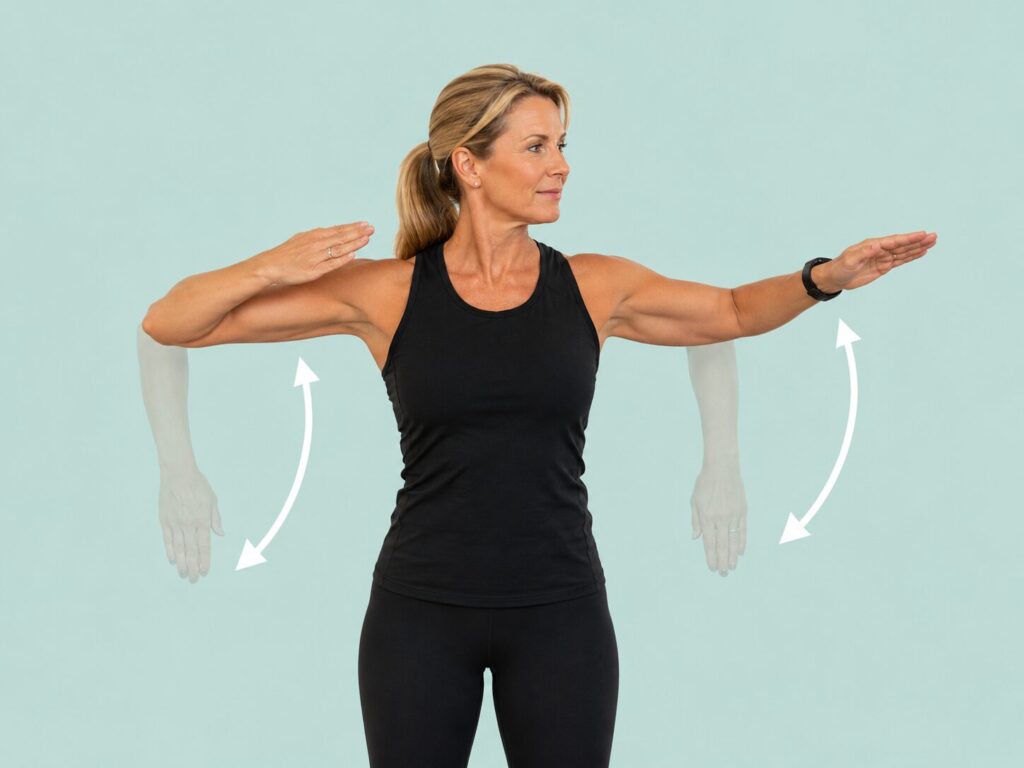
Shoulder Stretches for Pain Relief & Better Mobility
Healthy shoulders are essential for everyday activities like reaching, lifting, driving, and playing sports such as pickleball. Regular stretching helps improve flexibility, maintain range of motion, reduce muscle tightness, and support proper shoulder mechanics. According to the American Academy of Orthopaedic Surgeons (AAOS), a combination of stretching and strengthening exercises is an important part of maintaining shoulder health and recovering from injury.
These stretches are designed to complement your Medical Massage treatment by helping you maintain the mobility gained during your sessions and reducing the likelihood of stiffness returning between appointments. If shoulder pain persists, limits your movement, or is accompanied by weakness, the American Physical Therapy Association (ChoosePT) recommends a professional evaluation to identify the underlying cause. Consistently performing your prescribed stretches can improve posture, support rotator cuff function, and help you stay active and pain-free.
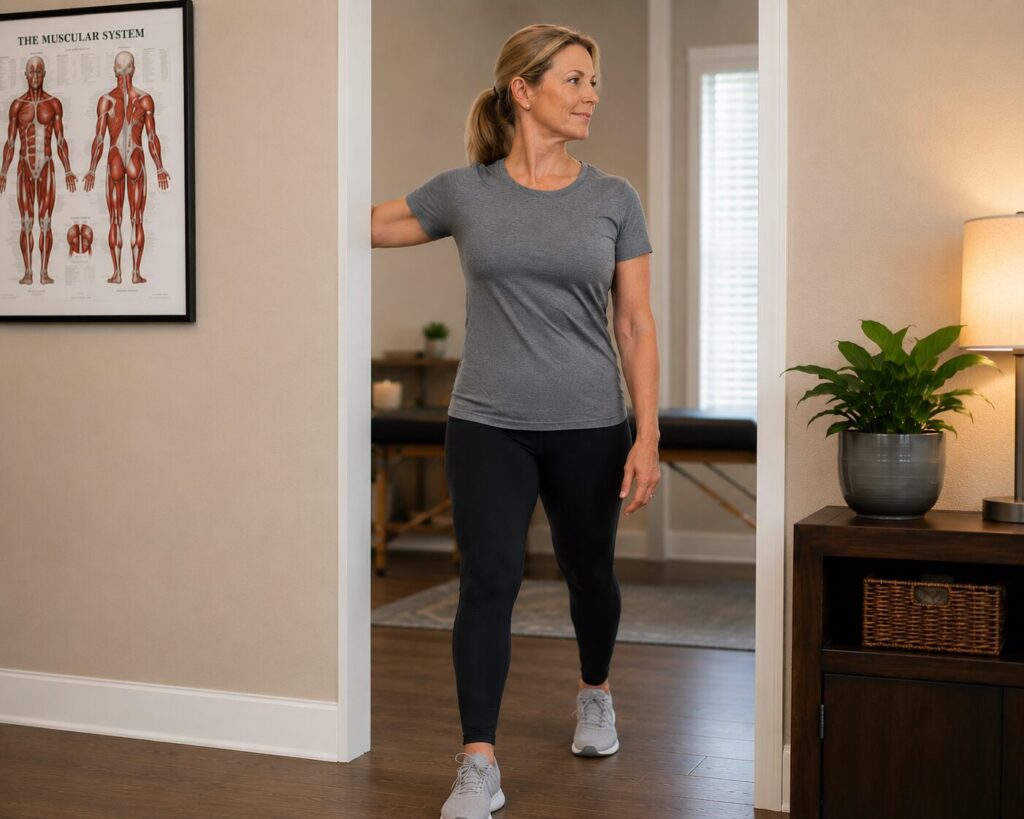
Unilateral Doorway Pectoral Major Stretch
- Stand beside a doorway with the shoulder you want to stretch closest to the doorframe.
- Extend your arm straight out to the side so it is parallel to the floor at shoulder height.
- Place your palm or the inside of your forearm against the outside edge of the doorframe, allowing your arm to remain behind the wall while your body stays in front of the doorway.
- Keep your elbow straight but not locked, and gently draw your shoulder blade down and back.
- Step forward through the doorway with the foot opposite the stretching arm.
- Keeping your chest lifted, your back straight, and your abdominal muscles gently engaged, slowly shift your body forward until you feel a gentle stretch across the front of your chest and shoulder.
- Avoid arching your lower back, shrugging your shoulders, or twisting your torso. The movement should come from stepping forward, not rotating your body.
- Hold the stretch for 20–30 seconds while breathing normally.
- Slowly step back to the starting position and repeat 2–3 times, then switch sides.
Tip: You should feel the stretch in the pectoral (chest) muscles, not pain in the shoulder. If you experience shoulder discomfort, lower your arm slightly below shoulder height or reduce how far you step into the doorway.
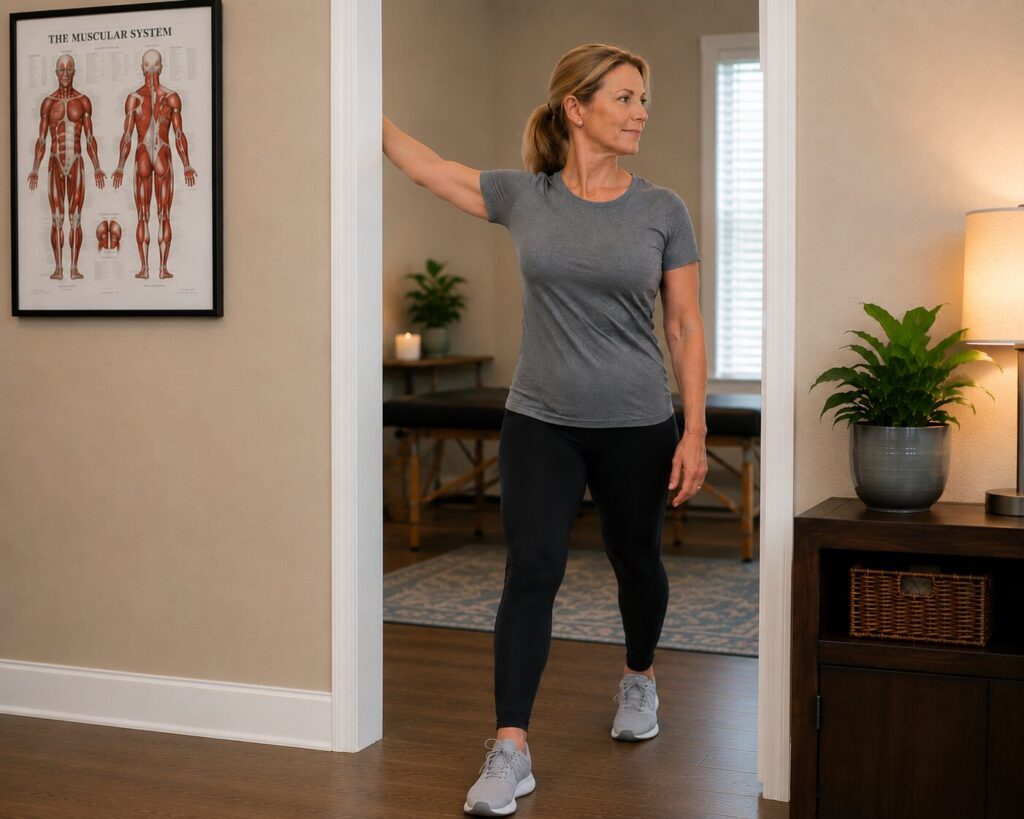
Unilateral Doorway Pectoral Minor Stretch
- Stand beside a doorway with the shoulder you want to stretch closest to the doorframe.
- Extend your arm straight out to the side so it is 45° to the floor at shoulder height.
- Place your palm or the inside of your forearm against the outside edge of the doorframe, allowing your arm to remain behind the wall while your body stays in front of the doorway.
- Keep your elbow straight but not locked, and gently draw your shoulder blade down and back.
- Step forward through the doorway with the foot opposite the stretching arm.
- Keeping your chest lifted, your back straight, and your abdominal muscles gently engaged, slowly shift your body forward until you feel a gentle stretch across the front of your chest and shoulder.
- Avoid arching your lower back, shrugging your shoulders, or twisting your torso. The movement should come from stepping forward, not rotating your body.
- Hold the stretch for 20–30 seconds while breathing normally.
- Slowly step back to the starting position and repeat 2–3 times, then switch sides.
Tip: You should feel the stretch in the pectoral (chest) muscles and upper arm, not pain in the shoulder. If you experience shoulder discomfort, reduce how far you step into the doorway.
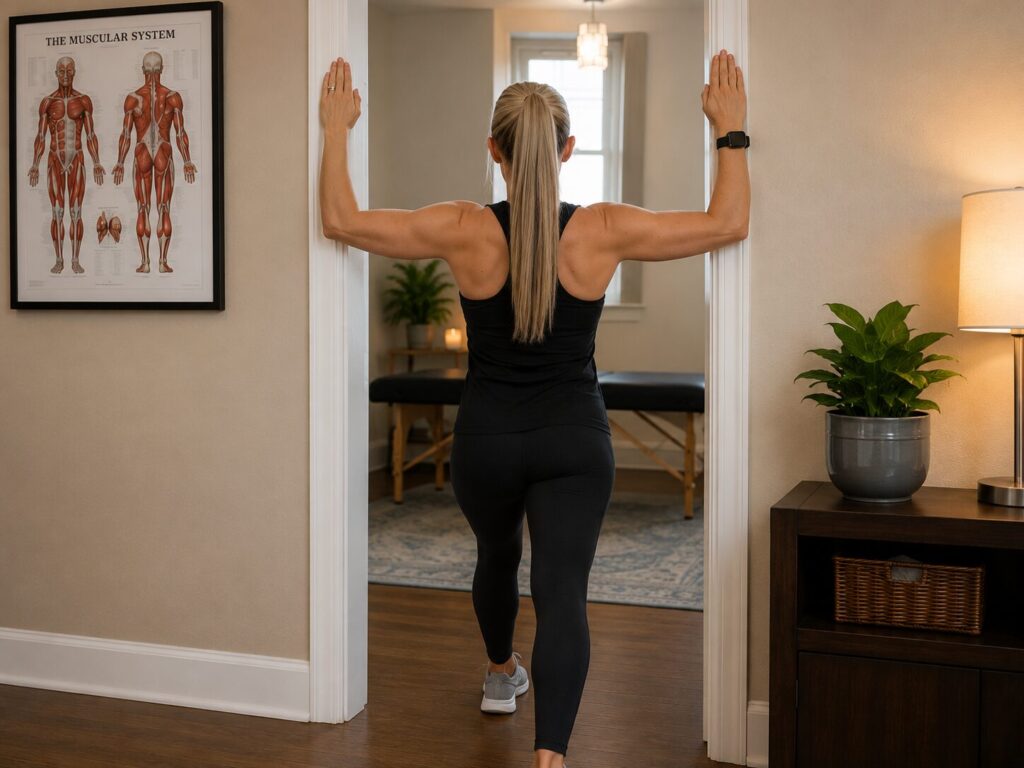
Rotator Cuff Stretch 1
- Stand in a door frame with your elbows bent to 90 degrees and your arms lifted out to the side. Only lift your arms as high as you can without pain and then place your forearms on the door frame on either side.
- Now gently step through the door so that you feel a stretch through the chest and the front of the shoulders on both sides. Hold the stretch for 30 seconds, relax, and then repeat a further 2 times.
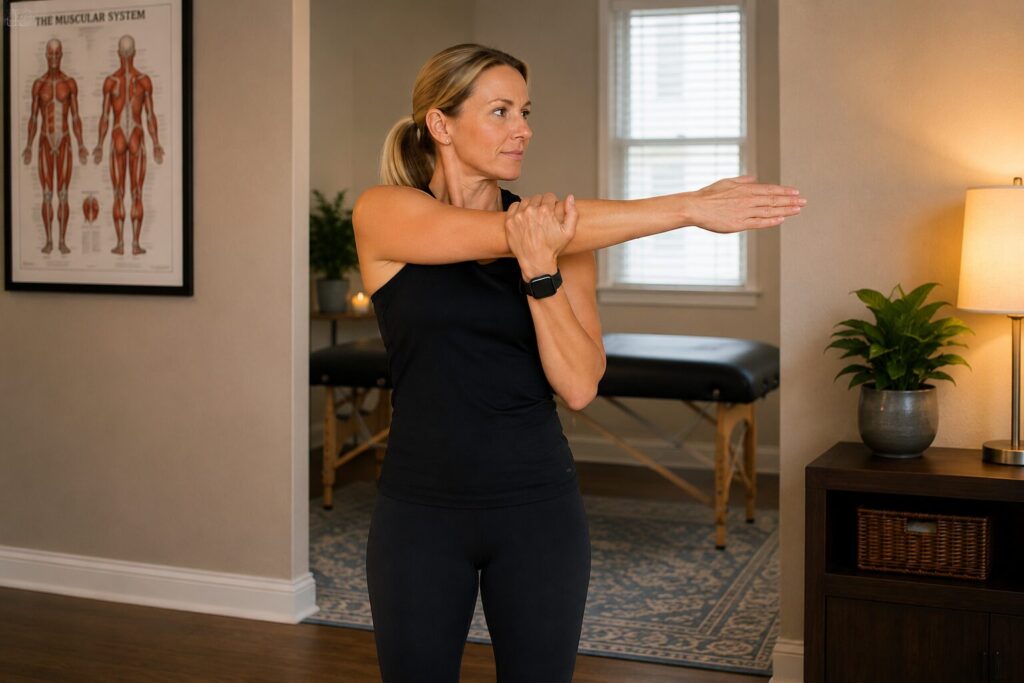
Rotator Cuff Stretch #2
- Extend the first arm, lift it in front of you until it’s horizontal, then rotate it towards the other arm’s shoulder.
- Place the second hand on the first arm’s elbow, and start to pull back the elbow until you feel a stretch at the side of the shoulder.
- Hold the position for 30 seconds.
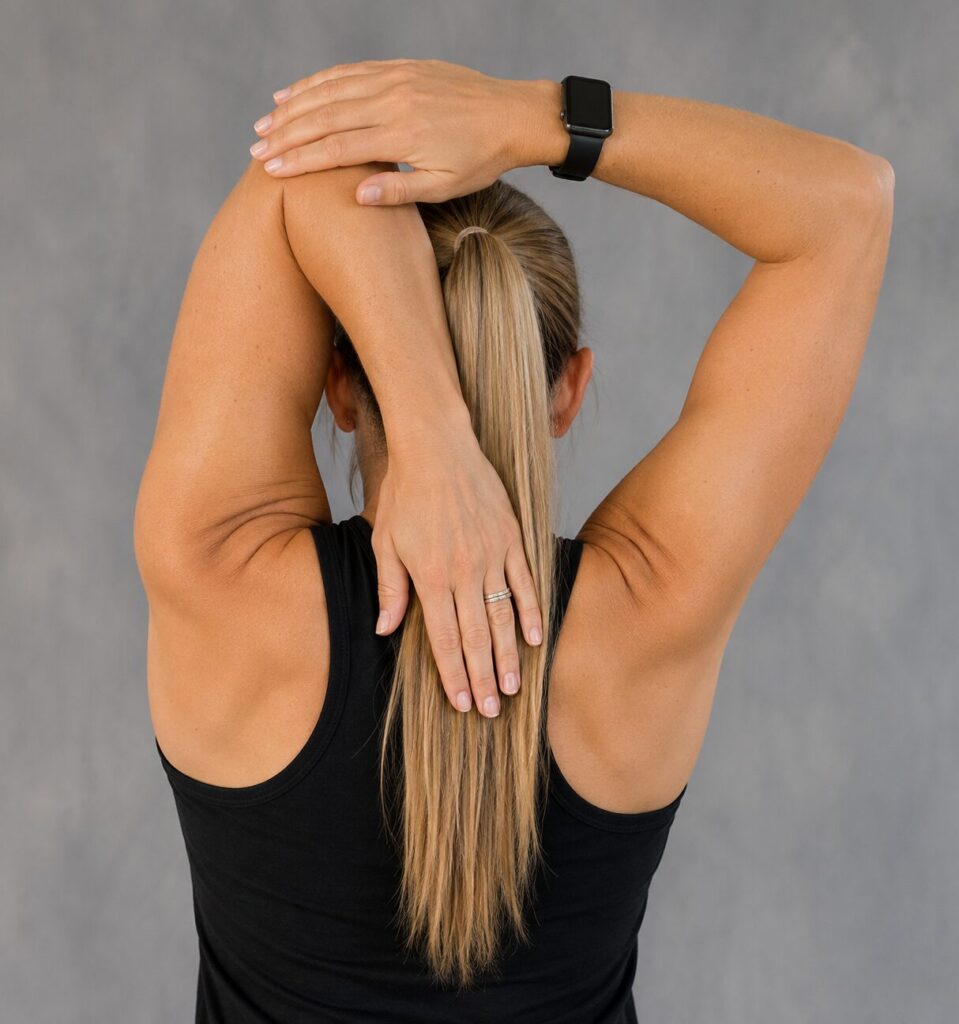
Triceps Stretch To Externally Rotate Your Shoulder.
- Bring your hand behind your head.
- Use the opposite arm to push down on the elbow like the picture above.
Internal Rotator Stretch
- With your elbows bent.
- Rotate your arms at the shoulder until your fingertips are pointing straight up. This will stretch and warm up your internal rotator cuffs.
- Move slowly and stop if you feel any pain. Keep your elbows elevated—they should be at least as high as your shoulders, if not slightly higher