Essential Leg Stretches for Better Walking and Pickleball Performance
Medical massage helps restore mobility, reduce muscle tension, and improve the way your body moves—but the work doesn’t stop when your session ends. Regular stretching of the glutes, hamstrings, quadriceps, and the muscles surrounding the IT band helps maintain and build on the progress achieved during treatment. Incorporating these stretches into your routine can improve flexibility, support healthy movement, reduce the risk of future injuries, and help keep you comfortable and active—whether you’re walking, exercising, or enjoying a game of pickleball, according to the American Academy of Orthopedic Surgeons. Your stretching routine is most effective when combined with a personalized Medical Exercise program designed to improve strength, flexibility, balance, and movement.
Glutes: The Foundation of Movement
Your glute muscles are the body’s primary hip stabilizers. They help keep your pelvis level while walking, climbing stairs, changing direction, and lunging for the ball on the pickleball court.
When the glutes become tight or weak, other muscles compensate, often leading to hip, knee, or lower back discomfort. Regular glute stretching helps maintain healthy hip mobility and allows the muscles to function more efficiently.
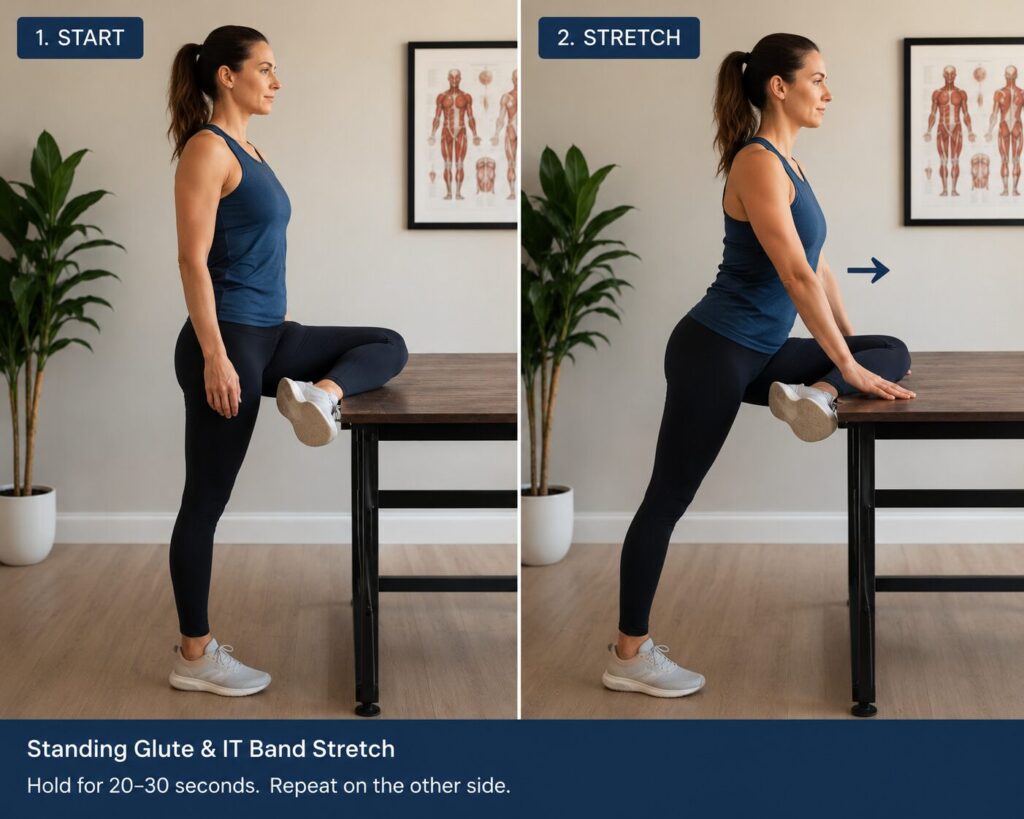
- Stand in front of a table (height is about mid-thigh or higher) with your feet facing the table and hips parallel to the table surface.
- Rotate the leg and place the foot on the table.
- The opposite leg remains extended with the foot flat on the floor.
- The torso and spine should be in a neutral and erect posture.
Tip: If your hips are tight and you cannot comfortably rest your lower leg flat on the surface, simply place your bent knee on the table or chair and allow your lower leg to remain angled upward. Do not force your shin to become parallel with the surface. As your flexibility improves over time, you can gradually lower your lower leg toward the table while maintaining good posture and avoiding pain.
Hamstrings: Supporting Stride and Flexibility
Tight hamstrings limit hip movement and can shorten your walking stride. They also place extra stress on the lower back and knees.
Improving hamstring flexibility promotes smoother movement, better posture, and more efficient walking. For pickleball players, flexible hamstrings make it easier to bend, reach low balls, and move quickly around the court.
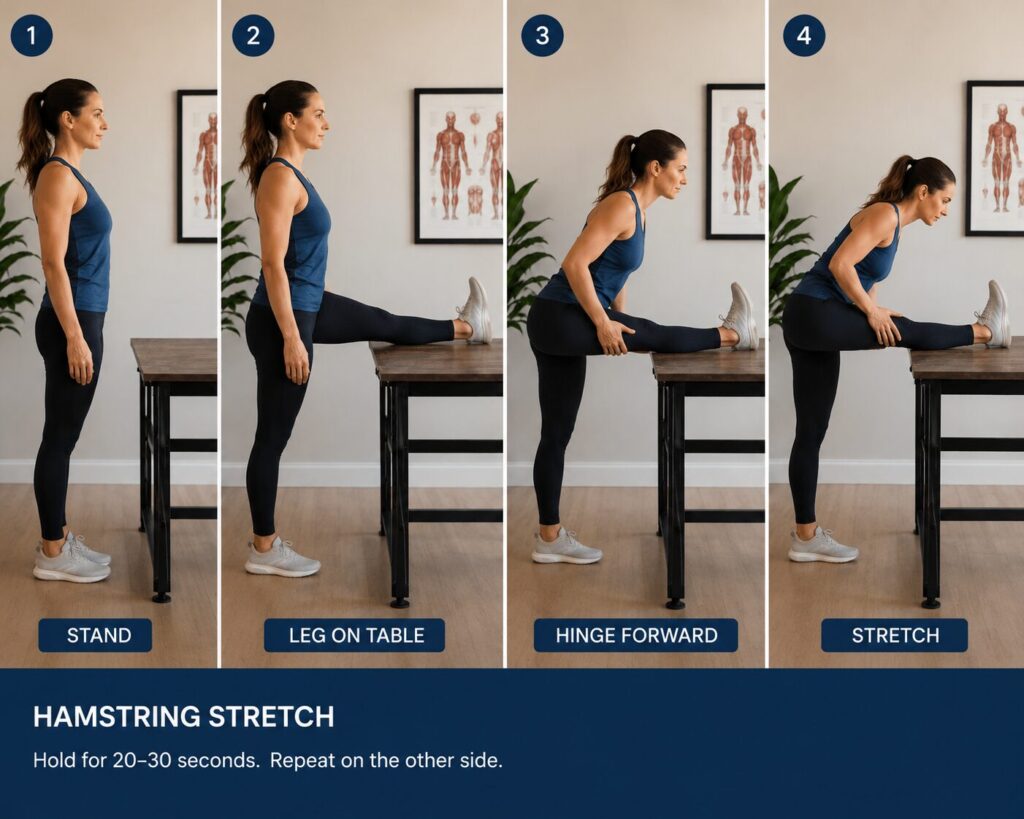
- Stand facing a sturdy table or chair that is about mid-thigh height or higher.
- Place one heel on the table with your knee straight but not locked.
- Flex your foot by pulling your toes up toward your shin.
- Keep your standing leg slightly bent and your foot pointing straight ahead.
- Stand tall with your back straight and your spine in a neutral position.
- Keeping your chest lifted, hinge forward slowly from your hips until you feel a gentle stretch along the back of your thigh. Avoid rounding your back.
- Hold the stretch for 20–30 seconds while breathing normally.
- Slowly return to the starting position and repeat on the opposite leg.
Tip: You should feel a gentle stretch in the hamstring, not pain. If the stretch feels too intense, reduce how far you lean forward or use a lower surface until your flexibility improves.
Quadriceps: Reducing Stress on the Knees
The quadriceps are responsible for straightening the knee and helping you stand, squat, and accelerate. Tight quads can pull excessively on the kneecap, contributing to knee pain and reduced mobility.
Stretching the quadriceps improves knee function, supports better balance, and helps you move more comfortably during daily activities and sports.
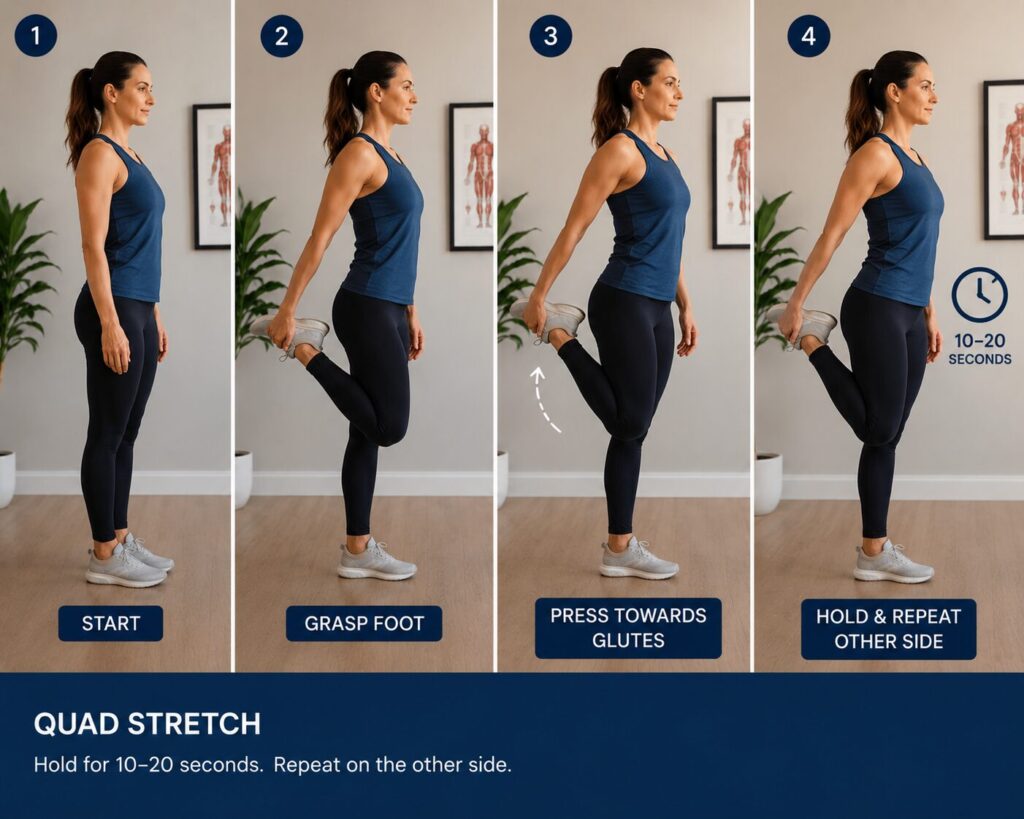
- Stand upright with your feet together and your knees close to each other.
- If needed, lightly hold onto a wall, chair, or countertop for balance.
- Bend one knee and bring your heel toward your buttocks.
- Grasp your ankle or the top of your foot with the hand on the same side.
- Keep your knees together and your standing leg slightly bent.
- Stand tall with your chest up, your back straight, and your abdominal muscles gently engaged. Avoid arching your lower back.
- Gently pull your foot toward your glutes until you feel a comfortable stretch along the front of your thigh and hip.
- Hold the stretch for 10–20 seconds while breathing normally.
- Slowly release your foot and repeat on the opposite side.
Tip: If you cannot comfortably reach your foot, loop a towel or stretching strap around your ankle to help bring your foot toward your body without straining. Stretch only until you feel a gentle pull—never pain.
Hip Flexors: Improving Mobility and Posture
The hip flexor stretch helps improve flexibility in the muscles at the front of the hip, which can become tight from prolonged sitting, walking, running, or repetitive movements such as lunging and pivoting during pickleball. Tight hip flexors can limit hip extension, contribute to lower back discomfort, alter your walking pattern, and reduce your ability to move efficiently on the court. Performing this stretch regularly after medical massage or exercise helps maintain hip mobility, improve posture, reduce strain on the lower back, and promote smoother, more powerful movement during everyday activities and sports.
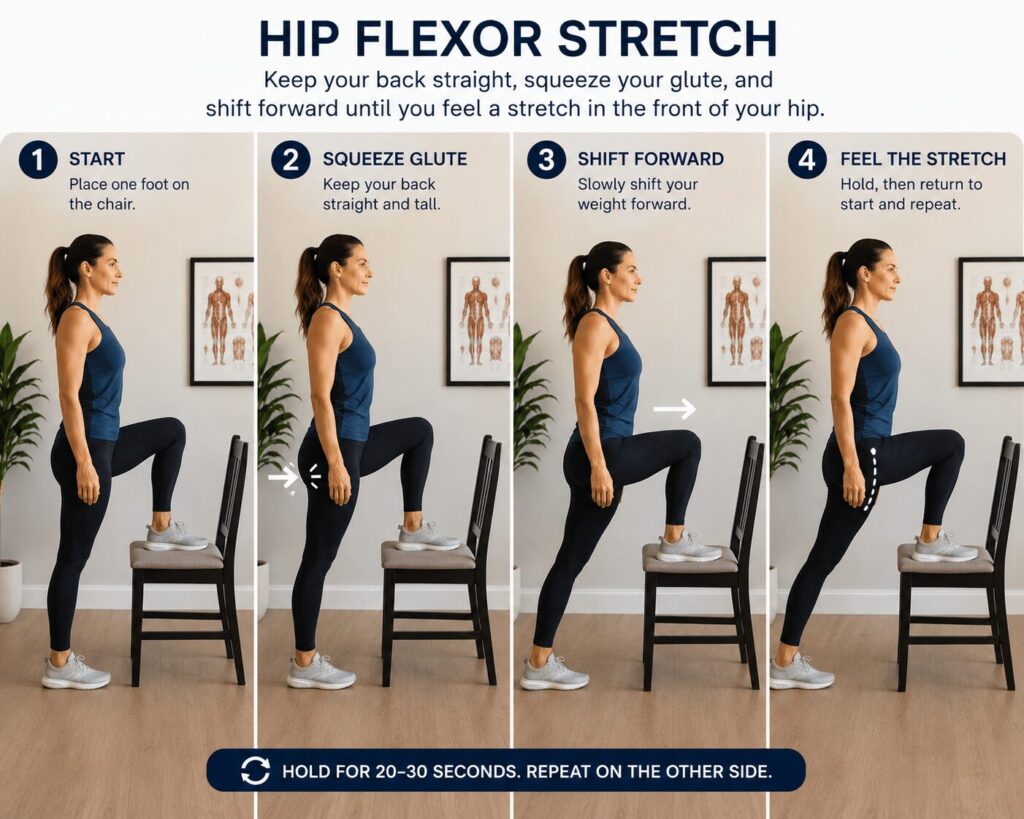
- Stand in front of a sturdy chair and place one lower leg on the seat with your knee bent at approximately 90 degrees.
- Keep your opposite foot flat on the floor with that leg positioned behind you.
- Stand tall with your chest lifted, your back straight, and your spine in a neutral position.
- Keep your hips and shoulders facing straight ahead throughout the stretch.
- Gently squeeze the glute (buttock) of the leg that remains on the floor.
- While maintaining the glute contraction, slowly shift your weight forward until you feel a gentle stretch along the front of the hip of the standing leg.
- Avoid arching your lower back or leaning your torso forward. The movement should come from your hips, not your spine.
- Hold the stretch for 20–30 seconds while breathing normally.
- Slowly return to the starting position and repeat on the opposite side.
Tip: The glute contraction helps tilt the pelvis into the correct position, allowing you to stretch the hip flexor more effectively while protecting your lower back. Stretch only until you feel a gentle pull, never pain.
Better Walking, Better Pickleball
Walking with a smooth, balanced gait depends on adequate flexibility, strength, and coordination throughout the hips and legs. Regular stretching helps you:
- Maintain an efficient walking pattern
- Improve balance and stability
- Increase mobility and flexibility
- Reduce stiffness after activity
- Lower the risk of muscle strains and overuse injuries
- Recover more comfortably after pickleball or exercise
Just a few minutes of stretching each day can make a noticeable difference in how you feel on and off the court.
If pain or stiffness persists despite regular stretching, it may be a sign that underlying muscle restrictions or movement imbalances need to be addressed. A personalized assessment and hands-on treatment can help restore mobility, reduce pain, and keep you doing the activities you love.